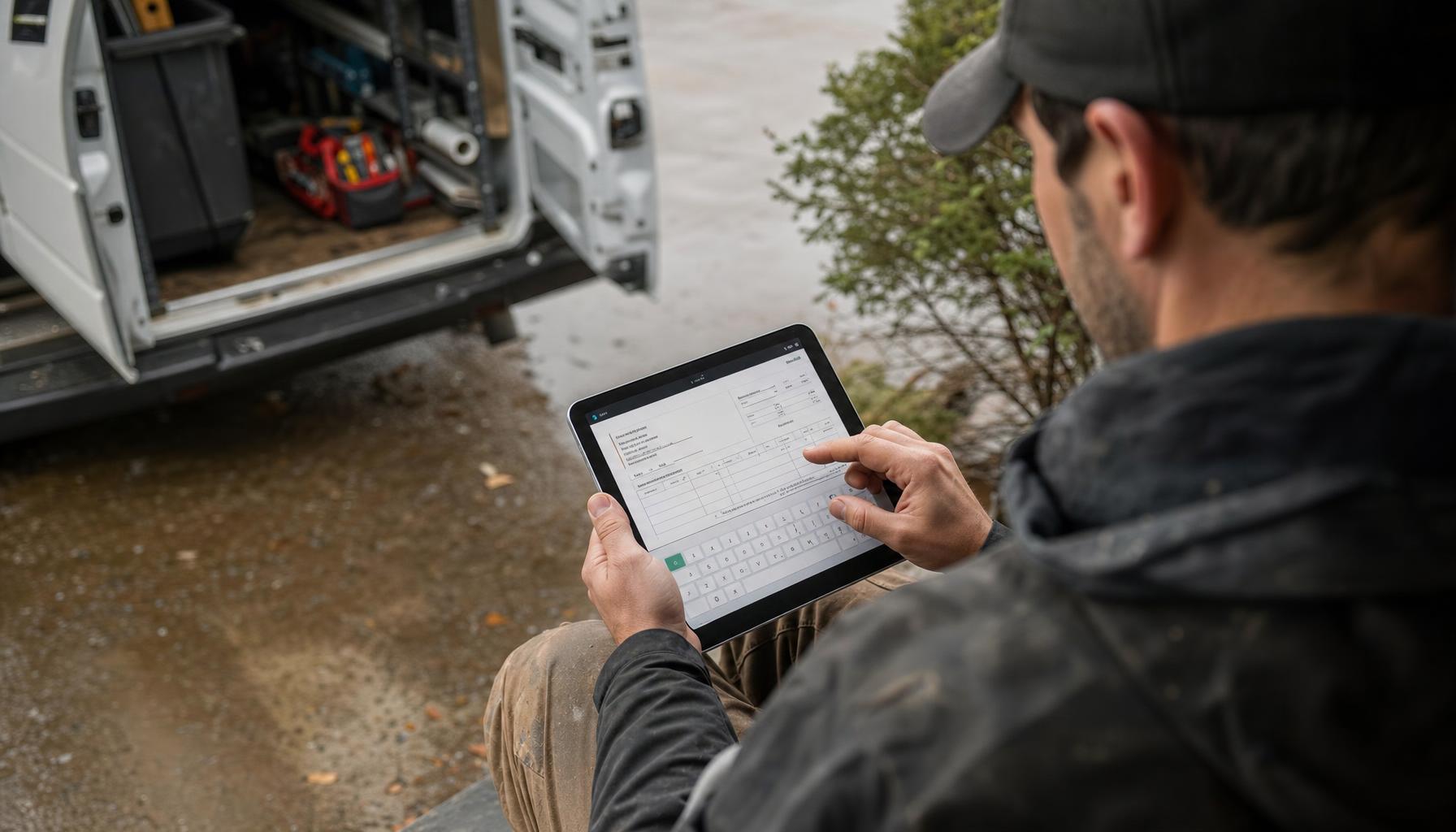
Roof Software vs. Paper Takeoffs: How Canadian Roofers Are Quoting Jobs Faster in 2026
Paper takeoffs aren't broken — they're just too slow to win the job anymore. Here's how Canadian roofing crews are using roof software to measure, quote, and close faster than the competition down the street.
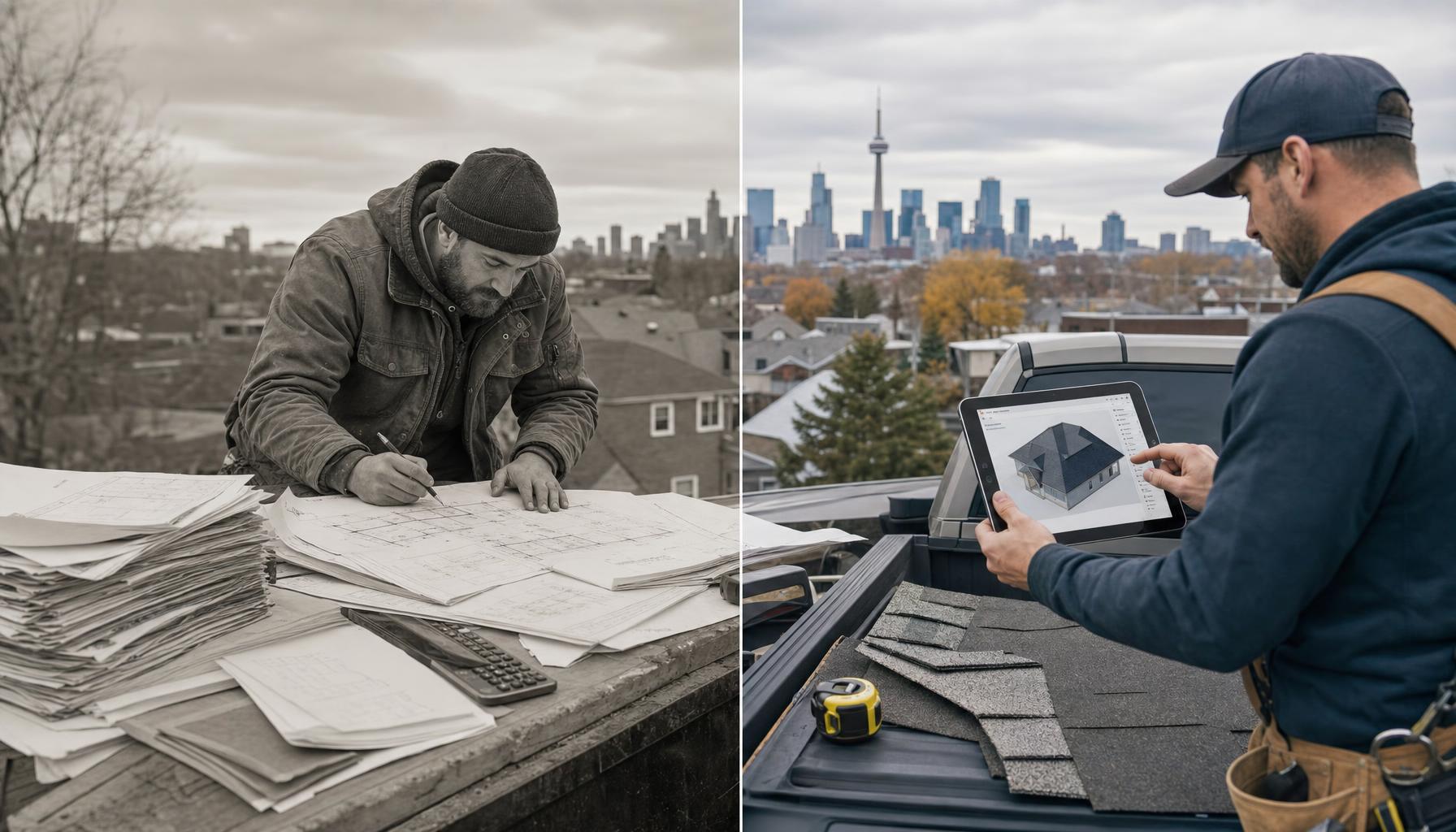
You’re standing on a steep-slope tear-off in Barrie, it’s -8°C, and you’ve got a tape measure, a clipboard, and a client waiting inside for a number. Sound familiar?
That’s still how a lot of Canadian roofing crews quote jobs. Climb up, eyeball the squares, sketch the roof plan on graph paper, drive back to the shop, punch it into a spreadsheet, then email a quote three days later — by which time the homeowner’s already got two other bids sitting on the kitchen table.
Paper takeoffs aren’t broken exactly. They’re just slow. And in a trade where the first legible quote often wins the job, slow costs you money. That’s the whole story behind why roofing estimating software is showing up on more trucks across Ontario, BC, and the Prairies this year — not because paper “doesn’t work,” but because it can’t compete on speed anymore.
Why Roof Software Is Replacing the Clipboard
Roof measuring software pulls squares, pitch, ridges, valleys, and waste percentage from satellite or drone imagery — no ladder required for the initial number. You still climb up to verify tricky sections (you should — nobody’s skipping that in this climate), but the bulk of the material takeoff happens before you’ve even left the driveway.
Here’s the part that actually changes your week: once the measurements are in, roofing quote software turns them straight into a proposal. Shingle count, underlayment, ice-and-water shield for the eaves (mandatory in most Canadian building codes given our freeze-thaw cycles), flashing, ridge vent, disposal fees — it’s all templated. You’re not re-typing the same line items into a Word doc for the fortieth time this month.
We hear the same complaint from roofers all over the country: “I know how to price a roof. I just don’t have three hours a night to write it up.” That’s the gap roof software actually closes.
What Slows Down a Paper Quote (And Where It Costs You)
Walk through a typical paper-based quote and count the handoffs:
- Climb the roof, measure by hand or estimate by eye
- Sketch the plan, note pitch and obstructions
- Drive back, transcribe notes into a spreadsheet
- Look up current material pricing (which changed again last week)
- Type up the quote, email it, hope they open it
Every one of those steps is a place where a number gets fat-fingered, a valley gets missed, or the quote just sits in your inbox drafts folder because you got called out to an emergency leak. Multiply that by five roofs a week and you’re bleeding hours you could be spending on the tools, not the paperwork.
Roofing estimating software collapses that whole chain into one pass. Measure, generate, send — often before you’re back at the shop. And because the numbers come from the same source every time, you’re not re-deriving your waste factor from memory on every single job.
Good/Better/Best: The Quote Format Winning More Roofs
One thing we push hard with Canadian roofing crews: stop sending one-price quotes. Give the homeowner three options — a Good/Better/Best breakdown (architectural shingles vs. a premium impact-rated line, standard flashing vs. upgraded, 25-year vs. lifetime warranty).
Hero AI can draft that full three-tier estimate from a voice note in under a minute. You’re standing at the truck after the walkthrough, you talk through what you saw — square footage, pitch, condition of the decking, any soft spots — and the quote’s ready to send before you’ve pulled out of the driveway. No more “I’ll get that to you by Friday” that turns into the following Tuesday.
Homeowners like having a choice instead of a single number that feels non-negotiable. And crews that send Good/Better/Best options consistently close more jobs at the middle-or-higher tier, because the upsell is baked into the format instead of feeling like a hard sell.
The Real Cost of a Slow Quote
Picture this: a homeowner in Kitchener has a hail-damaged roof and calls three roofers on a Saturday morning. Two of them say they’ll “take a look and get back to you.” The third shows up Monday, does a quick measure with roof measuring software, and has a Good/Better/Best quote in the homeowner’s inbox by Monday evening — before the other two have even scheduled their site visits.
Guess who gets the job.
This isn’t a hypothetical edge case — it’s the new baseline. Homeowners comparison-shop roofers the same way they comparison-shop everything else now, and the first clean, professional, itemized quote in their inbox has a real head start. Paper takeoffs weren’t built for that pace. Roof software was.
We covered a similar shift in the outdoor trades in our guide to landscaping software in Canada — the pattern’s identical: the contractors winning more work aren’t necessarily better at the trade. They’re just faster to respond, faster to quote, and easier to say yes to.
Where Roof Software Fits in a Small Crew’s Day
If you’re a 3-10 person roofing outfit, you don’t need an enterprise system built for national franchises. You need something that handles the actual friction points in your week:
- The quote — measure the roof, generate the Good/Better/Best estimate, send it same-day
- The phone — Hero AI answers calls while you’re up on a roof and can’t hear your phone ring, and books the estimate straight onto your schedule instead of going to voicemail
- The schedule — routing the day’s site visits and crew jobs so you’re not backtracking across town between a repair in the morning and a tear-off in the afternoon
- The invoice — chasing the payment on that insurance claim job from six weeks ago that’s still sitting unpaid
Larger commercial landscape and snow contractors in Canada often run platforms like Aspire or LMN by Granum for budgeting, crew time tracking, and estimating at scale — solid tools if you’re managing dozens of crews and commercial snow contracts. But most residential roofing shops don’t need that level of overhead. They need the quote out the door fast and the phone answered when they’re sixteen feet up a ladder.
That’s the gap Hero AI fills — one AI teammate handling the back-office work a 5-person roofing crew can’t justify hiring a full-time office person for.
Getting Started Without Overhauling Your Whole Process
You don’t have to throw out your paper templates on day one. Most roofers we talk to start with one thing — usually the phone, because missed calls are the most obvious leak, or the quoting, because that’s where deals actually die waiting in a truck console.
Hero AI starts at $24.99/month for the AI Concierge that answers and books your calls 24/7 — no per-seat pricing, no onboarding call, no demo you have to sit through. You download the app, you hire it, it starts working.
If missed calls are costing you jobs before you even get to quote them, that’s worth fixing first — see how contractors never miss another call. And if it’s the quoting side that’s dragging, our page on how Canadian trades win more quotes walks through the Good/Better/Best format in more detail.
Either way, the clipboard’s had a good run. But this season belongs to the crews quoting from the truck, not the kitchen table three days later.
Ready to see it on your own roofs? Download the Hero365 app and hire Hero AI today.