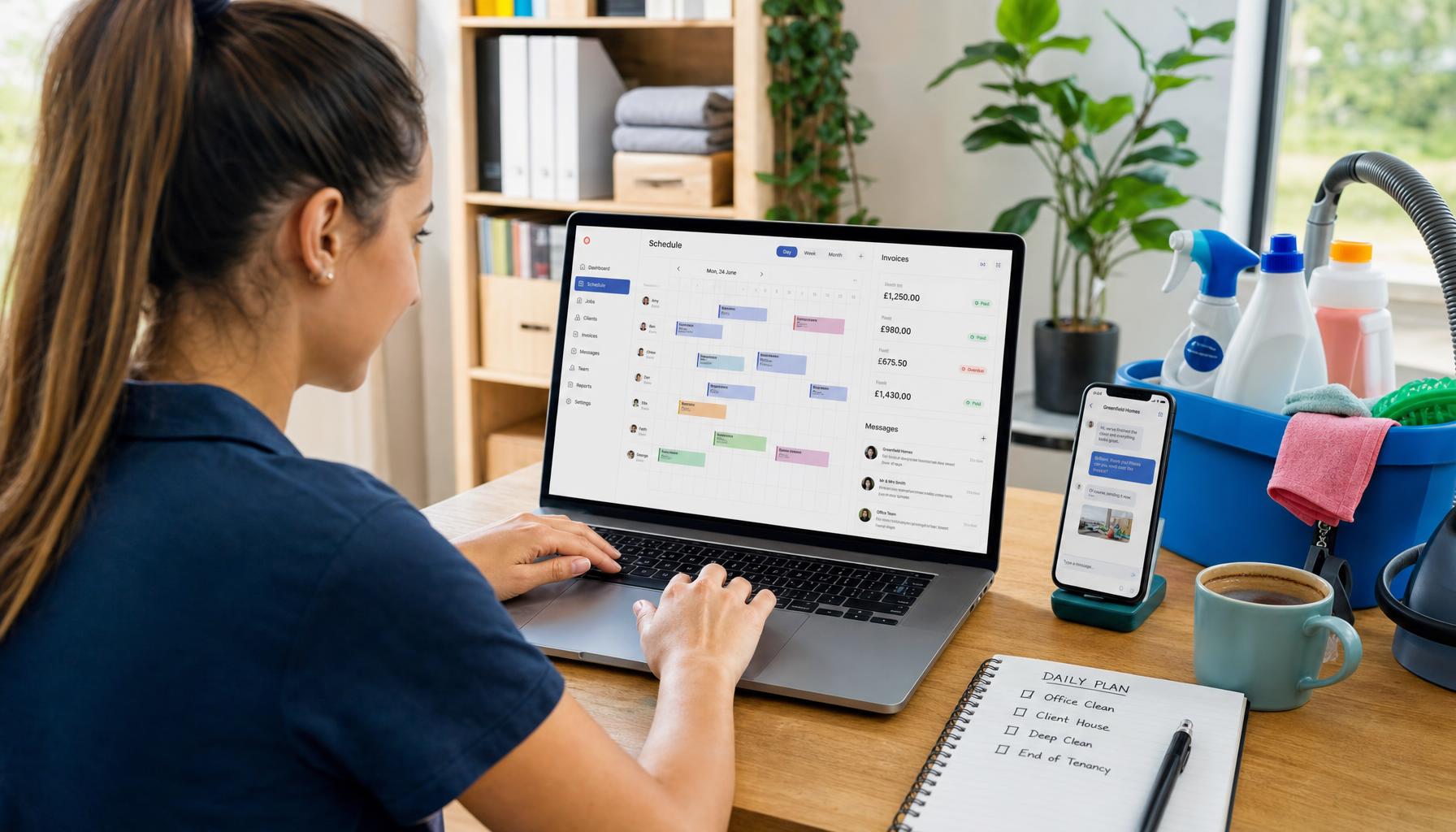
Scheduling Software for Plumbers: How an AI Dispatcher Fills Same-Day Emergency Slots
Emergency callouts don't wait for office hours — but most plumbing scheduling software does. Here's how an AI dispatcher answers every call, triages the burst pipe from the tap replacement, and fills same-day slots before the customer rings someone else.

The 7am phone call every plumber dreads (and needs)
A burst pipe doesn’t wait for office hours. It’s 7am, you’re halfway through a coffee, and your mobile’s already buzzing with a customer whose kitchen is flooding. You take that call. But the next three go to voicemail because you’re on your knees under a sink with a torch in your teeth.
Here’s the bit that stings: at least one of those missed calls was another emergency job worth £300-£500 on the day rate. Gone. Booked with whoever answered first.
That’s the real problem with scheduling software for plumbers that’s just a diary with a nicer interface. A calendar doesn’t answer the phone. It doesn’t triage a “my boiler’s making a banging noise” call against a “water’s coming through my ceiling” call. And it definitely doesn’t rearrange your afternoon to slot in an emergency without you lifting a finger. What fills same-day emergency slots isn’t a better calendar — it’s someone (or something) picking up the phone, understanding the job, and putting it on the board before you’ve even seen the missed call notification.
Why plumbing scheduling is harder than it looks
Most job dispatch software treats every booking the same — pick a slot, confirm, done. Plumbing doesn’t work like that.
An emergency callout (burst pipe, no hot water, sewage backup) needs to jump the queue. A routine job (tap replacement, annual boiler service) can wait a week. And if you’re doing rental compliance work, a CP12 landlord gas safety certificate has a legal deadline attached — miss it and your landlord client is exposed, not just inconvenienced. Whoever’s taking the call needs to know the difference between “book this whenever” and “drop everything.”
A human office manager can make that call in her head in two seconds. The trouble is, most plumbing outfits with 1-10 vans can’t justify a full-time person sat by the phone from 7am to 9pm chasing every ring. So the calls that come in outside “normal hours” — which, for a plumber, is basically all the emergencies — go unanswered. We wrote about the wider scheduling picture in our guide to employee work scheduling software for UK trades businesses, but emergency dispatch is really its own animal.
What an AI dispatcher actually does differently
This is where Hero AI earns its keep. It’s not a smarter calendar bolted onto your existing setup — it’s an AI teammate that answers the phone itself, 24/7, and asks the questions a good dispatcher would ask: where’s the leak, is the water off, is anyone in danger, what’s the postcode.
From there, Hero AI checks who’s nearest and free, books the emergency straight onto the board, and texts the customer a confirmation — all before you’ve finished drying your hands. If your day’s already packed, it re-routes the job to whichever engineer has the shortest drive, which is also how Hero AI trims 10-15% off drive time across the week generally, not just on emergency days.
Compare that to the maths most plumbers are quietly living with: contractors miss around 40% of calls that come in outside office hours. If even a third of those are genuine emergencies at £300-£500 a job, that’s real money walking straight to a competitor who happened to answer. Hero AI answers all of them, every time, so the job lands on your schedule instead of someone else’s.
Estimating and quoting — the other half of “same-day”
Filling the slot is only step one. Winning the job at the door, and then getting the invoice paid without a three-week chase, is what actually keeps the emergency profitable.
This is where plumbing estimating software and plumbing quoting software usually falls flat — most of it still expects you to sit down at a laptop that evening and type up a quote from memory. By the time it lands in the customer’s inbox, they’ve already had two other quotes and picked one.
Hero AI drafts a Good/Better/Best estimate from a voice note in under a minute, on-site, while the job’s still fresh. You describe what you found — say, a corroded stopcock and a knackered ballcock valve — and Hero AI turns it into three priced options the customer can approve on their phone before you’ve packed the van. No typing, no “I’ll email it over,” no lost afternoon.
And once the job’s done? Hero AI chases the overdue invoice for you, reconciles the payment against the job, and keeps your books tidy — including flagging CIS deductions if you’re subbing work through a main contractor. We go into the compliance side properly in our piece on CP12 landlord gas safety certificates, but the short version is: whatever your dispatch system is, keeping that certificate paperwork attached to the job record is what keeps you covered when a landlord asks.
How this stacks up against other job dispatch software
Plenty of tools in this market do parts of this well. Tradify handles quotes, scheduling and invoicing for trades, and its published pricing is straightforward — Lite at £34, Pro at £37, and Plus at £44 per user, per month. That’s a solid choice if what you need is a well-organised job management system that a human still runs day to day.
But per-user pricing punishes growth. Add a fourth engineer and your Tradify bill jumps again — before that engineer’s even brought in a day’s revenue. And none of the tools in this market — Tradify included — actually answer your phone for you. They’re built to organise the jobs you already know about, not to catch the ones ringing through while your hands are full of pipe fittings.
Hero365 starts at £19.99 a month for the AI Concierge — one flat price, not a per-seat charge that climbs every time you hire. It answers your calls, books the emergency, drafts the estimate, and chases the invoice. It’s not replacing your job management — it’s doing the front-desk job you can’t afford to hire a human for.
Picture next Tuesday morning
Same scenario. Burst pipe at 7am. Except this time, Hero AI’s already answered, confirmed the address, and booked it into the 15-minute gap between your two morning jobs — because it saw the gap and knew this call couldn’t wait. By 7:04 you get a notification, not a missed-call icon. You’ve lost nothing. The customer’s had a text confirming an engineer’s on the way. And the two other calls that came in while you were driving? Also booked. Also confirmed.
That’s the difference between scheduling software that stores your diary and an AI dispatcher that actually fills it.
If you’re tired of finding out about your emergency callouts after they’ve gone to someone else, it might be worth seeing what an always-on dispatcher does to your booking rate. Check out pricing and hire Hero AI from £19.99/month, or just download the Hero365 app and put Hero AI on the phones this week. No demo call, no per-seat pricing, no onboarding fee — just answer the next emergency before it becomes someone else’s job.