Roofing Software Comparison 2026: The CRM Features That Actually Close Storm-Damage Jobs
Storm season rewards whoever answers the phone first — not whoever does the best work. Here's what actually separates roofing CRM tools that close storm-damage jobs from the ones that just track them.
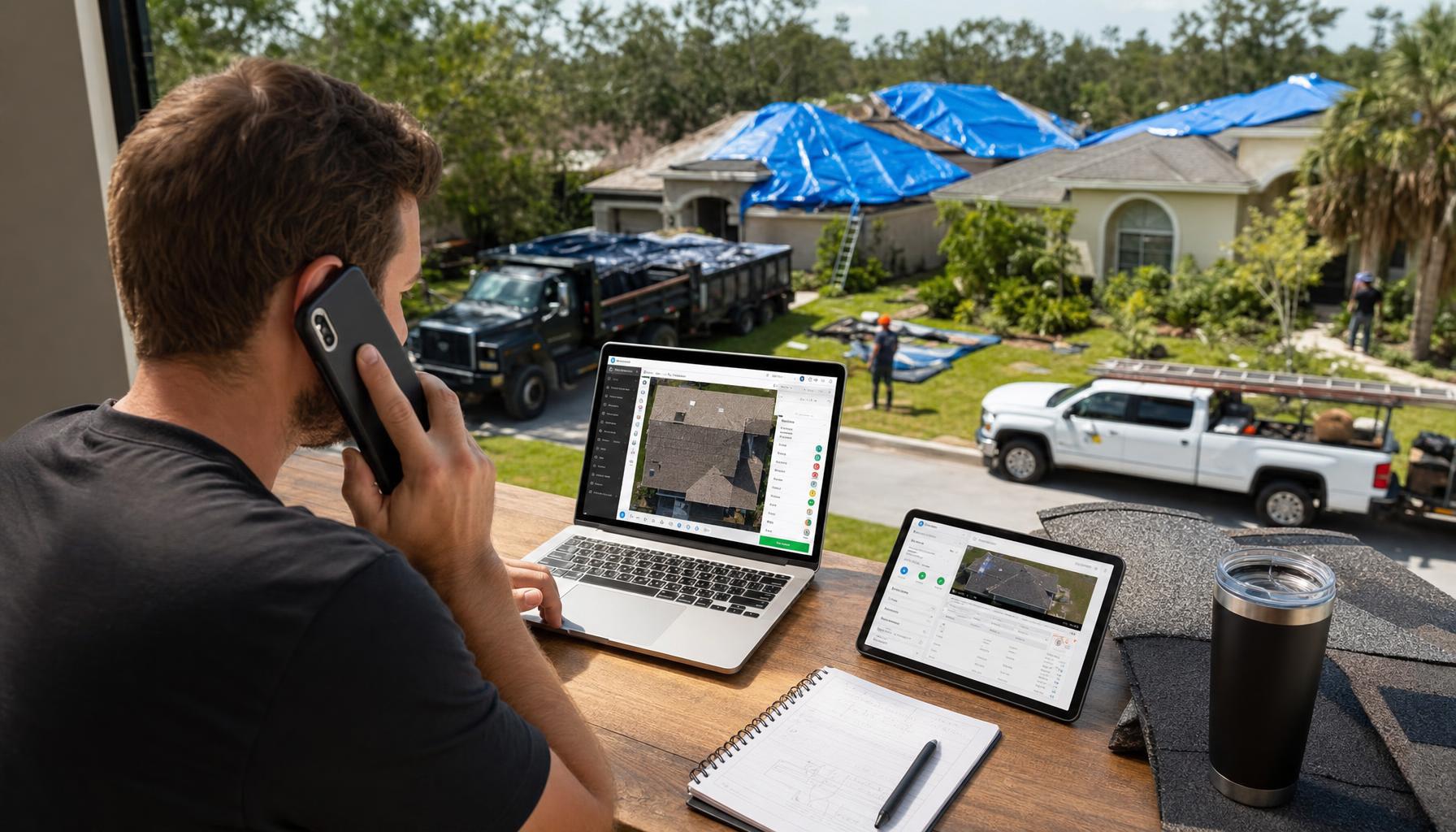
A hailstorm rolls through at 4 PM on a Tuesday. By 6 PM your phone won’t stop buzzing. By Thursday, three other roofing crews are knocking on the same doors you were planning to canvas this weekend.
Storm season isn’t a lead problem for roofers. It’s a speed problem. Everybody in a 20-mile radius gets the same hail hit at the same time, and the crew that answers the phone first, gets an adjuster-ready estimate out fastest, and follows up before the homeowner forgets your name is the crew that closes the job. Not necessarily the best roofer. The fastest responder.
That’s why “roofing software” and “roofing CRM” searches spike every storm season — and why most of what people find doesn’t actually solve the problem. A lot of roofing business software is really just job-costing and scheduling with a “leads” tab bolted on. It’ll track a job once you’ve got it. It won’t help you win it while three other trucks are circling the same neighborhood.
So let’s talk about what actually matters when you’re comparing roofers software this year — and where the storm-chasing playbook breaks down without the right tools behind it.
What “Roofing CRM” Actually Needs to Do in Storm Season
Most roofing CRM tools were built around the steady-state residential reroof — homeowner calls, you schedule an inspection next week, you send a quote, they think about it for a month. Fine for that. Useless when 200 homes just got hit by hail and every one of them is calling five roofers at once.
A roofing CRM built for storm work needs to:
- Capture every call, every time — including the 11 PM panic call about a tarp, and the Saturday morning calls that come in faster than a human can pick up
- Turn a roof inspection into an insurance-ready estimate fast — adjusters and homeowners both want documentation, and “I’ll get you something next week” loses the job to the guy who texts a PDF same-day
- Track claim status alongside job status — because a storm-damage job isn’t done when the estimate’s approved, it’s done when the insurance check clears and the crew’s been paid
- Route and dispatch crews efficiently when you’ve suddenly got triple the normal workload and half your guys are already on roofs
Generic job management software checks maybe two of those boxes. That’s the gap.
The Storm Response Speed Test
Here’s a scenario every roofing contractor knows: it’s the Monday after a storm. You’ve got 40 voicemails, a stack of “call me back” texts, and a crew that needs to be on a roof by 7 AM. Do you spend the morning on the phone triaging leads, or on the roof doing the work you actually get paid for?
With Hero AI answering your calls, that morning looks different. Every one of those 40 calls gets picked up — not voicemail, an actual conversation — and booked straight onto your schedule as a storm-damage inspection. Most small roofing outfits miss around 40% of after-hours calls. In storm season, that’s not a missed call, that’s a job that just went to the crew down the street who happened to pick up.
Then when your crew climbs the roof, does the inspection, and needs to turn that into a Good/Better/Best estimate — three-tab shingle repair, architectural reroof, or full tear-off with upgraded underlayment — Hero AI drafts it from a voice note in under a minute. Not days of back-and-forth with your office manager typing up line items. A minute.
Roofing Software Comparison: What You Actually Pay For
Let’s get specific, because “it depends on your needs” isn’t an answer anyone finds useful at 9 PM after a 12-hour day on the roof.
| Best for | Published pricing | Storm-response strength | |
|---|---|---|---|
| ServiceTitan | Large multi-crew roofing companies with dedicated office staff | Quote only — not published | Strong reporting, but per-seat pricing punishes growth right when you need more crews on the ground |
| Housecall Pro | Small residential roofing shops doing steady-state work | $59-299/mo | Decent scheduling, thinner on insurance-claim workflow and after-hours call capture |
| FieldEdge | HVAC/plumbing-first shops that also do some roofing | Quote only — not published | Built for a different trade’s job cycle, per-seat costs add up fast |
| Jobber | Small teams wanting simple job tracking | Quote-only pricing | Solid basics, but you won’t know your cost until you talk to sales |
| Hero365 (Hero AI) | Roofing crews of any size who need calls answered and estimates out fast | From $19.99/mo | Built around answering the call and drafting the estimate — the two things that actually win storm jobs |
Notice the pattern with the per-seat tools: ServiceTitan and FieldEdge both charge per user, which means the exact moment storm season hits and you want to add two more estimators to handle the volume, your software bill jumps too. That’s backwards. You should be able to scale up for six weeks of storm chasing without your CRM punishing you for it.
We wrote more about this seat-pricing trap in our ServiceTitan alternatives guide — worth a read if you’re currently locked into per-seat pricing and dreading the next invoice.
The Parts of Roofing CRM Nobody Talks About
Storm-chasing gets the attention, but the software that actually protects your margins does quieter work too.
Dispatch that accounts for roof-specific realities. Routing a roofing crew isn’t the same as routing a plumber. You’ve got material deliveries timed to dumpster drop-offs, weather windows that shift daily, and crews that can’t just “swing by” a job between two others because they need the whole rig set up. Hero AI routes the day’s jobs with 10-15% less drive time — which matters more in roofing than most trades because a wasted hour on the road is an hour your crew isn’t up on a roof getting paid.
Getting paid without chasing. Insurance claims already take forever. The last thing you need is your own invoicing dragging things out further. Hero AI chases overdue invoices and reconciles payments automatically, so the homeowner’s final payment (after the insurance check and their deductible) doesn’t sit unpaid for six weeks because nobody had time to follow up.
Follow-up that catches problems before the review does. A missed shingle, a gutter that wasn’t reattached quite right, a homeowner who’s annoyed the dumpster sat in their driveway an extra day — these things happen on every crew. Hero AI follows up after every job and catches the unhappy customer before they leave a one-star review instead of a phone call.
1099 and sales-tax cleanliness. Storm season means subcontractors, temp labor, and material purchases across state lines sometimes. Keeping your books straight for 1099 filing and sales-tax reporting isn’t optional, and it’s a lot easier when your invoicing and payment records are already reconciled instead of scattered across three spreadsheets in December.
What This Actually Costs You
Here’s the math roofing contractors run in their heads and rarely say out loud: a missed call during storm season isn’t a missed $50 service fee. It’s a missed reroof — potentially a five-figure job once you factor materials, labor, and the insurance-approved scope. Miss ten of those calls over a bad storm week because you were up on a roof and couldn’t pick up, and you’ve left real money on the table.
Compare that to what hiring Hero AI actually costs: $19.99/month to start. No per-seat pricing, no demo call, no onboarding fee — you download the Hero365 app and it’s answering calls that day. Growth and Scale plans ($149/mo and $349/mo) add more depth as your crew count grows, but you’re not paying more just because you added a third truck.
If you want to see how the estimate drafting and invoice chasing work before committing to anything, our free tools hub has calculators worth playing with first.
Picking the Right Fit for Your Crew
If you’re running a two-truck operation trying to capture every storm lead without hiring a full-time office person, the math is pretty simple. If you’re a 50-person operation with a dedicated call center already, ServiceTitan’s reporting depth might justify the per-seat cost. Most roofing businesses reading this fall somewhere in between — big enough that missed calls hurt, small enough that per-seat software bills hurt more.
Storm season doesn’t wait for you to finish evaluating software. Hail doesn’t care about your Q3 roadmap. If your current setup means voicemails pile up after hours and estimates take three days to turn around, that’s lost jobs every single storm — not a hypothetical, an ongoing cost.
We’d rather you never miss another call than lose one more storm job to the crew that happened to answer first. Check pricing and see what hiring Hero AI actually looks like for a crew your size — it takes less time than the average storm-damage inspection.