Field Service Scheduling Software: How AI Dispatch Kills No-Shows and Double-Bookings
Two trucks, one address, one furious customer. Field service scheduling software was supposed to fix this — most of it just digitizes the whiteboard. Here's how real AI dispatch stops no-shows and double-bookings before they happen.
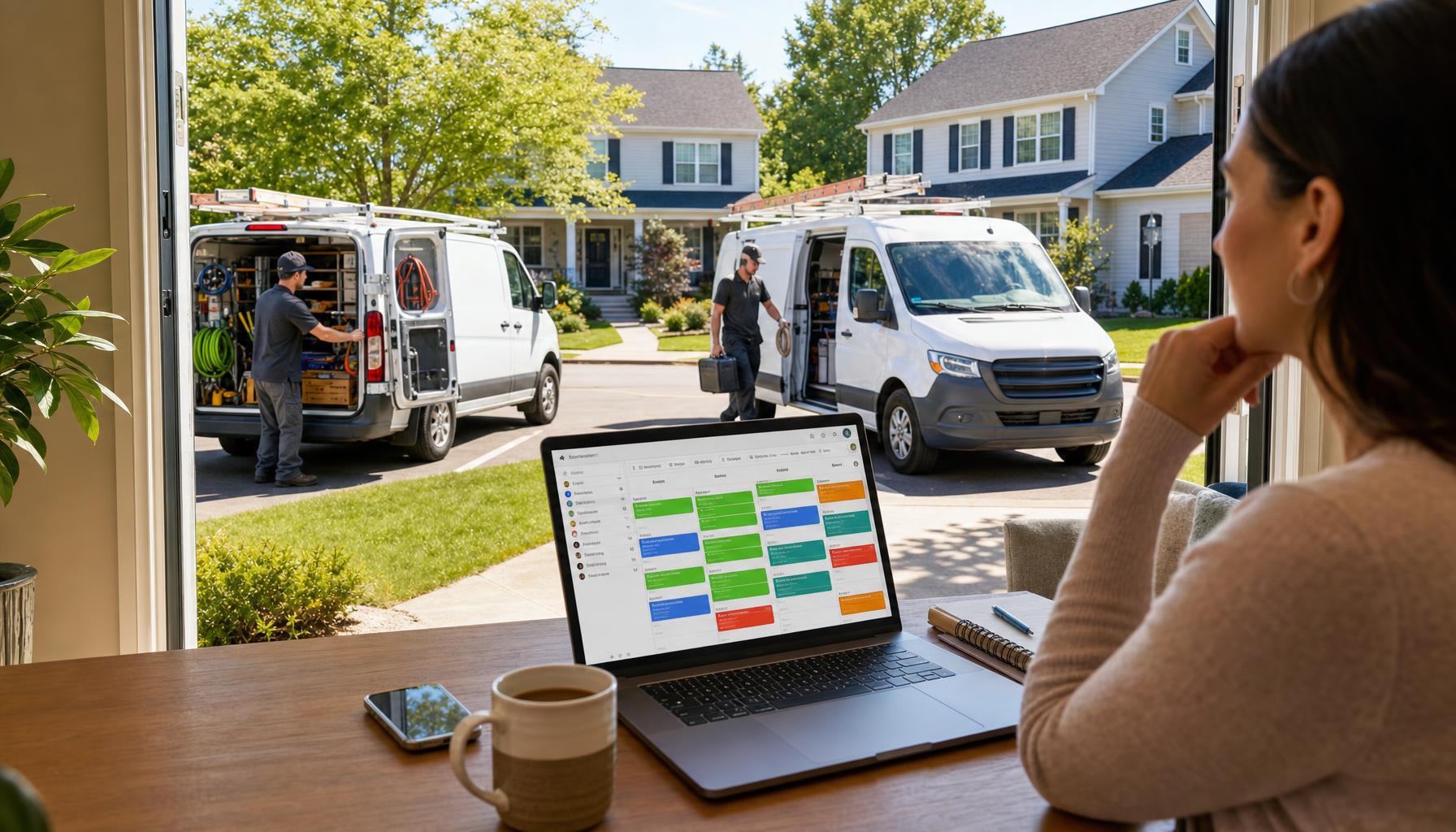
Two trucks show up at the same address at 9 AM. Your best tech is idling in traffic across town while a job three minutes from his last stop goes to someone else. And the recurring maintenance visit you promised a customer last spring? Nobody scheduled it, and now they’re calling a competitor.
If any of that sounds familiar, you don’t have a scheduling problem you can fix with a bigger whiteboard. You have a dispatch problem — and it’s costing you real jobs, not just headaches. Field service scheduling software exists to solve exactly this, but most of what’s out there just digitizes the whiteboard. It still needs a human staring at a map, moving jobs around by hand, hoping nobody forgets to call the 2 PM. Real field service dispatch software — the kind with AI actually doing the routing — catches the conflicts before they happen, not after the second truck is already stuck in traffic.
Why Field Service Scheduling Software Keeps Failing Small Shops
Most scheduling tools on the market were built for a dispatcher who sits at a desk all day watching a board. Great, if you can afford that person. But if you’re running a 3-to-10-tech operation, you’re the dispatcher, the estimator, and probably the guy answering the phone between jobs. Something’s going to slip.
The classic failure points:
- Double-booking. Two jobs land on one tech’s calendar because nobody cross-checked before confirming the second one.
- No-shows. A customer forgets, or your tech runs long on the previous job and nobody tells the next customer.
- Bad routing. Techs zigzag across town instead of working a tight loop, burning gas and hours you’re paying for.
- Recurring jobs falling through the cracks. Quarterly pest treatments, seasonal HVAC tune-ups, monthly landscaping — these live in somebody’s memory instead of a system, and memory fails.
None of these are scheduling failures exactly. They’re dispatch failures — a lack of someone (or something) constantly re-checking the board as conditions change in real time.
What Actual AI Dispatch Does Differently
Hero AI doesn’t just hold your schedule — it actively manages it. When a call comes in, Hero AI checks tech availability, drive time, and job type before it ever confirms a slot. That’s the difference between “software that shows you a calendar” and dispatch software that prevents the conflict in the first place.
Picture this: it’s Tuesday afternoon, a customer calls about a leaking water heater. Hero AI answers the call, books the job, and slots it into the tech who’s already closest and has a matching skill set — not just the next available name on the list. No back-and-forth, no “let me check and call you back.” The job goes straight onto the board, and the tech’s route updates automatically.
That’s route optimization for field service done the way it should work — not a static plan you build Monday morning, but a route that adjusts as the day actually unfolds. Hero AI routes the day’s jobs and keeps drive time down 10-15% compared to a manually built schedule, because it’s re-optimizing every time something changes, not just once at 7 AM.
Recurring Service Scheduling Without the Sticky Notes
This is where most small shops leak revenue nobody talks about. You did a great job on a maintenance contract, the customer’s happy, and then… six months later they call someone else because nobody followed up. Recurring service scheduling shouldn’t depend on someone remembering to check a spreadsheet.
Hero AI keeps recurring jobs on the calendar automatically — the seasonal tune-up, the quarterly treatment, the annual inspection — and follows up with the customer before the visit is due, not after they’ve already found somebody else. It’s the same reason we built dedicated tracking for compliance-heavy recurring work; if you’re managing refrigerant logs on top of scheduling, our guide to EPA-608 refrigerant tracking covers how to keep that clean without a separate spreadsheet either.
No-Shows Cost More Than the Missed Job
A missed appointment isn’t just an empty slot in the schedule. It’s a customer who now doubts you, a tech who wasted a trip, and — if it happens twice — a one-star review with your name on it. Hero AI reduces no-shows two ways: automated reminders before the visit, and real-time rebooking if a tech is running behind, so the customer gets a heads-up instead of a surprise.
We wrote more on the mechanics of this in How HVAC Contractors Can Use AI to Automate Scheduling, Dispatch, and Follow-Ups in 2026 — the short version is: the fewer humans re-keying appointment data by hand, the fewer no-shows you get.
What This Costs vs. What You’re Probably Paying Now
If you’re comparing options, here’s where the market actually sits, based on published pricing:
| Per-seat cost | Built for AI dispatch | Notes | |
|---|---|---|---|
| ServiceTitan | Quote only — not published | ❌ | Enterprise field-service, heavy setup |
| FieldEdge | Quote only — not published | ❌ | HVAC/plumbing focused, per-seat |
| Housecall Pro | $59-299/mo | ❌ | SMB-friendly, manual dispatch |
| Jobber | Quote-only | ❌ | Pricing not published |
| Hero365 (Hero AI) | From $19.99/mo, no per-seat fee | ✅ | AI answers, books, and routes automatically |
Notice the pattern: the enterprise tools charge per seat, so every tech you hire raises your software bill. That’s backwards for a 5-person shop trying to grow. Hero AI doesn’t charge per seat — you hire one AI teammate that handles the whole front desk and dispatch board, whether you’ve got 2 trucks or 12. We broke down the full comparison in Hero365 vs. ServiceTitan if you want the details.
Getting Started Without Ripping Out What You’ve Got
You don’t need to overhaul your whole operation to fix dispatch. Start with the calls you’re already missing — Hero AI answers after-hours calls 24/7 and books them straight onto the schedule, which alone recovers the roughly 40% of after-hours calls most small contractors miss entirely. From there it’s a short step to letting Hero AI manage the daily route and the recurring jobs too.
If you’ve been putting off fixing the whiteboard because you assumed field service scheduling software meant a six-figure enterprise contract and a per-seat bill that grows with every hire, it doesn’t have to. You can download the Hero365 app and have Hero AI answering calls and building routes today — no demo call, no onboarding fee. Check pricing here or see how it fits your specific trade on our dispatch smarter page.
Your next double-booking is preventable. It just needs something watching the board that never gets distracted.